- Tandem
- Posts
- Your activation is broken, you just don't know where
Your activation is broken, you just don't know where
Most teams know something's wrong but can't pinpoint exactly what. Here's the framework to find what's killing your metrics – without the guesswork.

Christophe Barre
August 24, 2025
Hey – Christophe here,
A lot of companies we talk to know something's wrong with their user activation and adoption.
Most can measure conversion. Fewer can measure time-to-value or retention. Almost none can pinpoint exactly where things go wrong – despite having Mixpanel, Amplitude, FullStory, and a dozen other tools.
The signs are everywhere, some visible, others hidden. Support tickets clustering around the same features. Drop-offs everyone's accepted as "normal." That powerful feature only 15% of users ever touch.
Today, I'll show you how to spot these opportunities hiding in your product.
→ We're also building an Activation Audit Tool to help with this analysis. If you are interested in it or in our team assisting you, please let us know here.
Why this matters to your business
Every friction point costs you compound revenue. Fix a 30% drop-off in onboarding, and you don't just gain those users, you gain their lifetime value, their referrals, their expansion revenue.
Time-to-value is everything. The faster users see benefit, the more likely they activate, adopt, and expand. Every extra step delays that moment and increases churn risk.
The difference? A total onboarding revamp takes 6 months and $500K of engineering time. Finding and fixing specific friction points with an intelligence layer like Tandem? Weeks to implement, immediate ticket deflection, measurable activation gains.
Your actionable framework
Quick wins hiding in plain sight:
Support patterns: Export your last 100 tickets and paste them into Claude. Ask: "What are the top 5 repeated problems?" That's your priority list.
The adoption graveyard: Features below 30% adoption have three causes: users don't know they exist, can't figure them out, or don't need them. Check which one with user interviews.
The reality check: Ask someone outside your industry (spouse, friend) to complete your onboarding. Watch them struggle with terminology you take for granted. Eye-opening every time.
Competitor intel: Read your 1-star reviews on G2/Capterra. Then read your competitors'. You'll spot patterns, and opportunities they're missing too.
If you have 30 minutes more:
Documentation overflow (5+ articles for one feature = too complex)
Search queries in help center (what users search = what they can't find)
Session recordings (watch 10 users, find 3+ struggling at same spot)
Manual workarounds (where your team configures what should be self-serve)
Example: How we worked with Aircall on their small account onboarding
We worked with their team to dissect onboarding piece by piece. We identified parts of the flow users were struggling with:
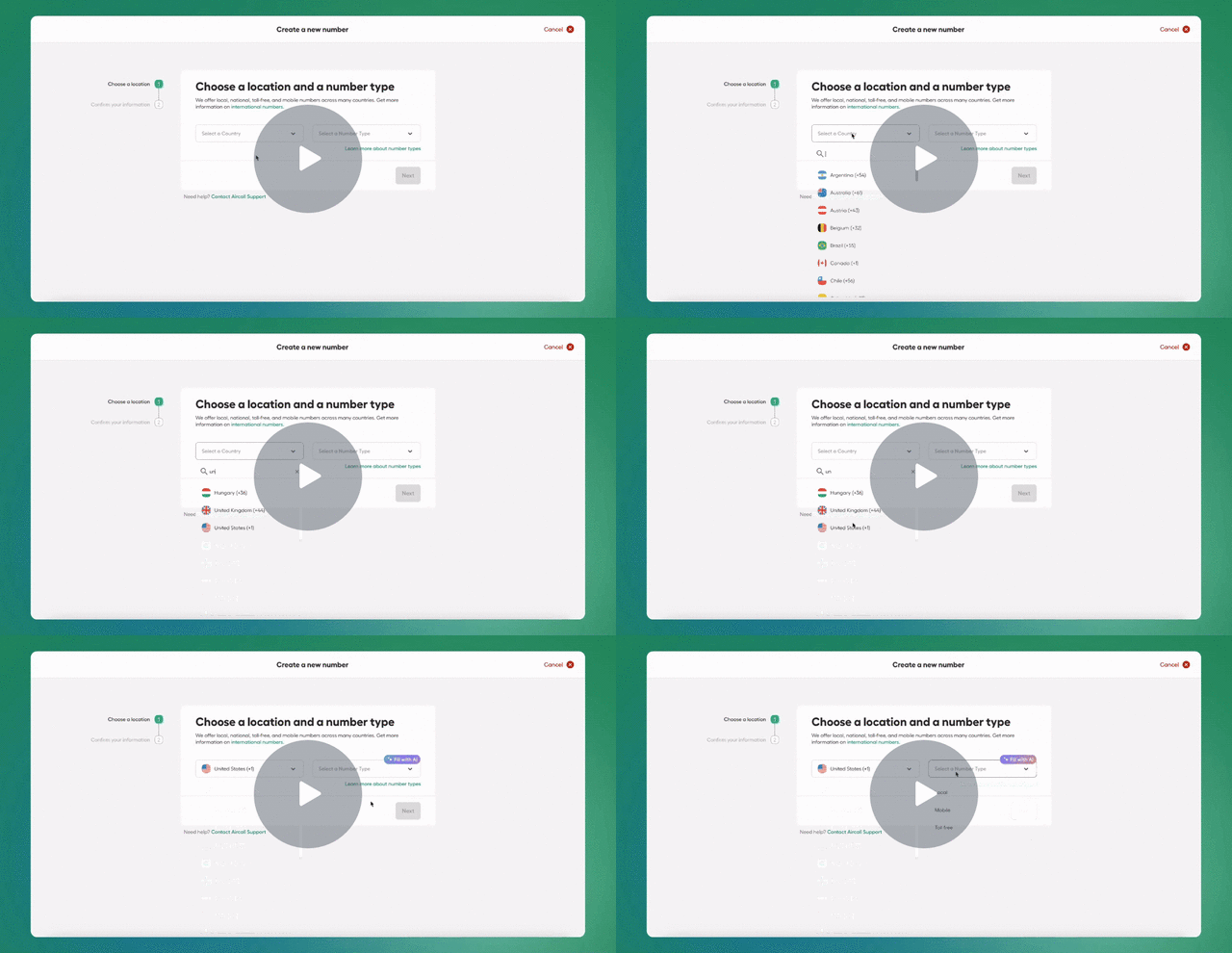
Step 1 - Buying a new number:
Problem: Users didn't understand some options (e.g. a local vs. toll-free vs. national vs. mobile number type).
Attempted solution: Knowledge base → most people don't go nor read them
Impact: Confusion, errors, reduced activation
Tandem's solution: In-context assistance to pick number type to increase activation rate by 20% on this feature (A/B tested).
Step 2 - Configuring numbers:
Problem: Complex workflow setup generating 10% of all tickets
Attempted solution: CSM manually configures → expensive, especially for small accounts
Impact: Tickets, delayed activation.
Tandem's solution: AI-powered configuration from natural language.
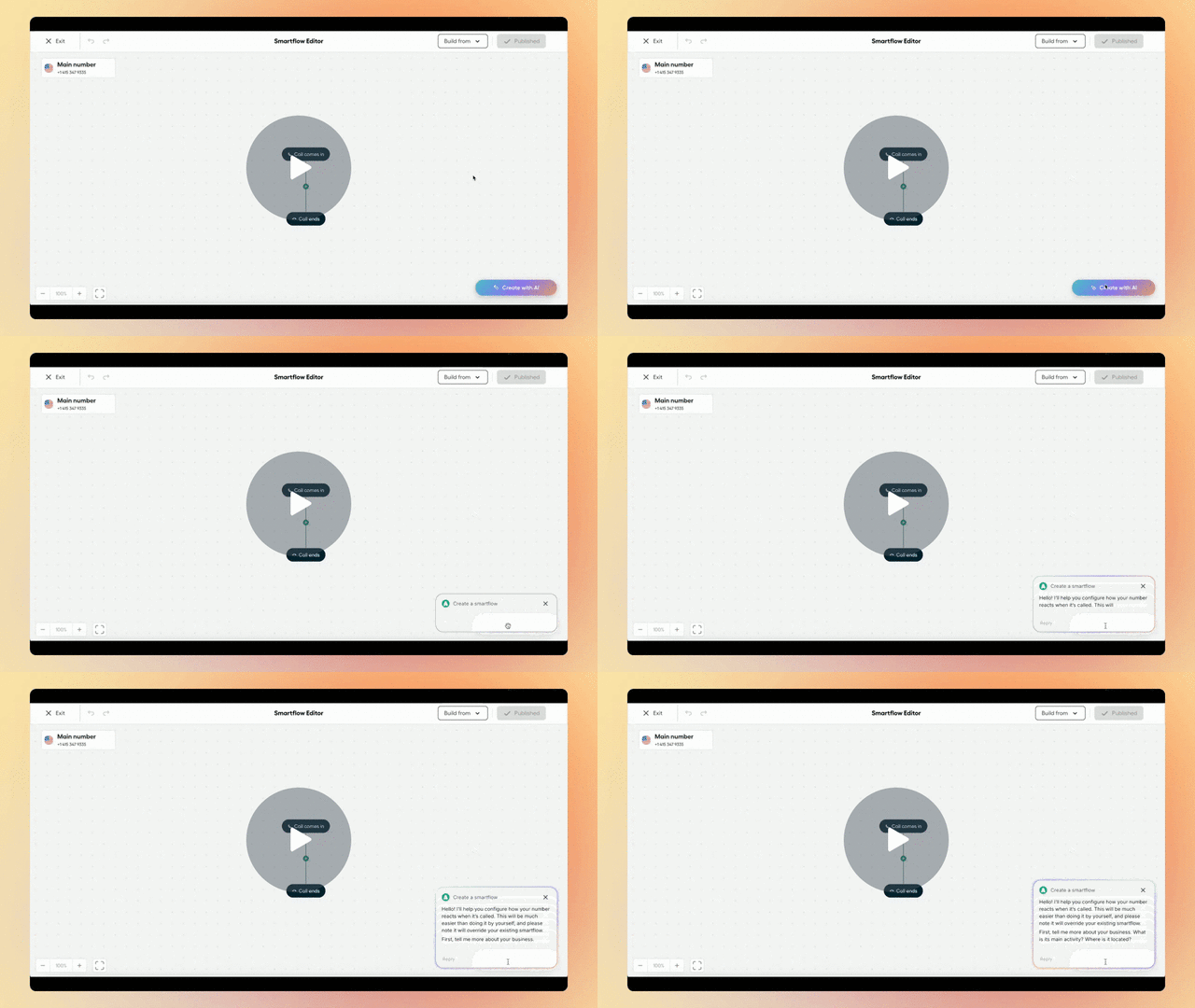
Instead of rebuilding everything, Tandem transformed the experience, in a natural non-bolted in way. Just intelligence where users needed it most.
Do this today
Export recent tickets → paste in Claude → find patterns
Check your worst-performing onboarding step
Watch one person outside your industry try your product
The problems are already visible. You just need to look.
Interested in digging deeper? We can help with that – our team and Activation Audit Tool (coming soon) can guide you through this analysis. Contact us here.
Cheers,
Christophe